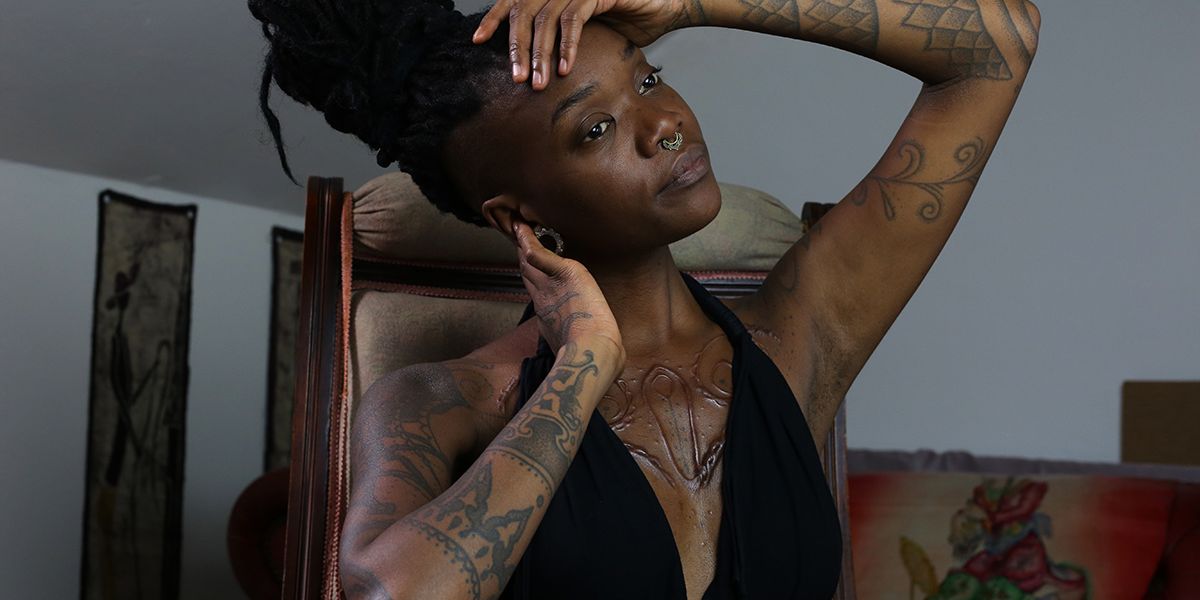
How Tattoos & Scarification Tell Stories

Andy Akinbamini
Click to view profile
Your body remembers what words you forget. Every scar, every intentional mark etched into skin carries stories that transcend language, connecting you to ancestors, community, and moments that defined who you became. African body symbolism recognizes something modern culture often misses: the skin isn't just covering; it's the most honest autobiography you'll ever write.
These aren't random decorations or impulsive aesthetic choices. They're deliberate narratives carved through pain into permanence, ensuring that important moments, tribal belonging, and personal achievements remain visible for life. The body becomes a walking library where every mark functions as a chapter in stories that refuse to be forgotten.
Scarification Creates Visible Identity Markers Across Communities
Scarification marks were used to uniquely distinguish individuals and tell rank in society, family, clan, and tribe. The Igbo Ichi facial markings symbolize honour, integrity, and valour for men. Among the Luba People of the Congo Basin, scarification called kulemba still serves as a means of encoding memories, with bodies metaphorically serving as books for knowledge preservation.
Rites of Passage Transform Children Into Recognized Adults
Traditionally, the most common reason for scarification has been as a rite of passage, marking milestone stages in both men's and women's lives, such as puberty and marriage.
Dinka youth receive forehead scars identifying their clans, whilst Nuba girls traditionally get marked at puberty and again at their first menstruation. These marks publicly announce the transformation from childhood dependency into adult responsibility within community structures.
Trends Show Pain Endurance Proving Worthiness for Adult Roles
With young men, enduring scarification pain exhibits strength and discipline, especially in tribes where males serve as hunters and warriors. Those showing no emotion during scarring are believed to be more worthy, whilst those who display pain are looked down upon.
Ethiopian and Zambian elaborate scarification on women at puberty denotes willingness to be mothers, showing they can stand childbirth pain, while indicating emotional maturity.
Spiritual Protection Gets Embedded Through Body Markings
Many tribes believed that certain skin markings offered protection from evil spirits, promoted healing, or granted blessings from ancestral deities. Animals, celestial symbols, or abstract motifs invoked specific qualities like strength, wisdom, or fertility.
The Ekoi of southeast Nigeria believe scars will serve as money on their way to the place of the dead, demonstrating how African body symbolism bridges material and spiritual realms.
Keloid Formation Creates Three-Dimensional Narrative Art
Scarification techniques involved cutting the skin, then manipulating the healing process by rubbing wounds with ash, clay, or gunpowder to create raised keloids. These weren't accidental results but deliberately engineered three-dimensional designs visible and touchable across large skin areas. The Mursi use swirling dotted patterns primarily for aesthetic reasons, to attract the opposite gender and heighten tactile experience during intimacy.
Colonial Suppression Transformed Body Art Into Resistance Acts
European colonial governments and Christian missionaries criminalized tattooing and scarification, viewing them as primitive practices requiring abolition. In Africa, these practices underwent decline, ended, or continued to be performed as acts of resistance against cultural erasure.
Tattoos in southern Mozambique initially defined clan identity, but later became deliberate acts of resistance against colonialists and missionaries attempting to erase indigenous cultures.
African body symbolism transforms skin into a narrative canvas. Tattoos and scarification communicate identity, achievement, and spiritual connections through permanent marks.
Visit our website for insights, creator stories, and trends shaping Africa.